Fibre is an essential component for our digestion and general health, even if we can’t break it down and turn it into energy.
The UK government guidelines state we should eat 30g of fibre daily, though most people in the western world only eat 18g/day.
There are two types of fibre, soluble & insoluble. Most vegetables have both types, but in different amounts.
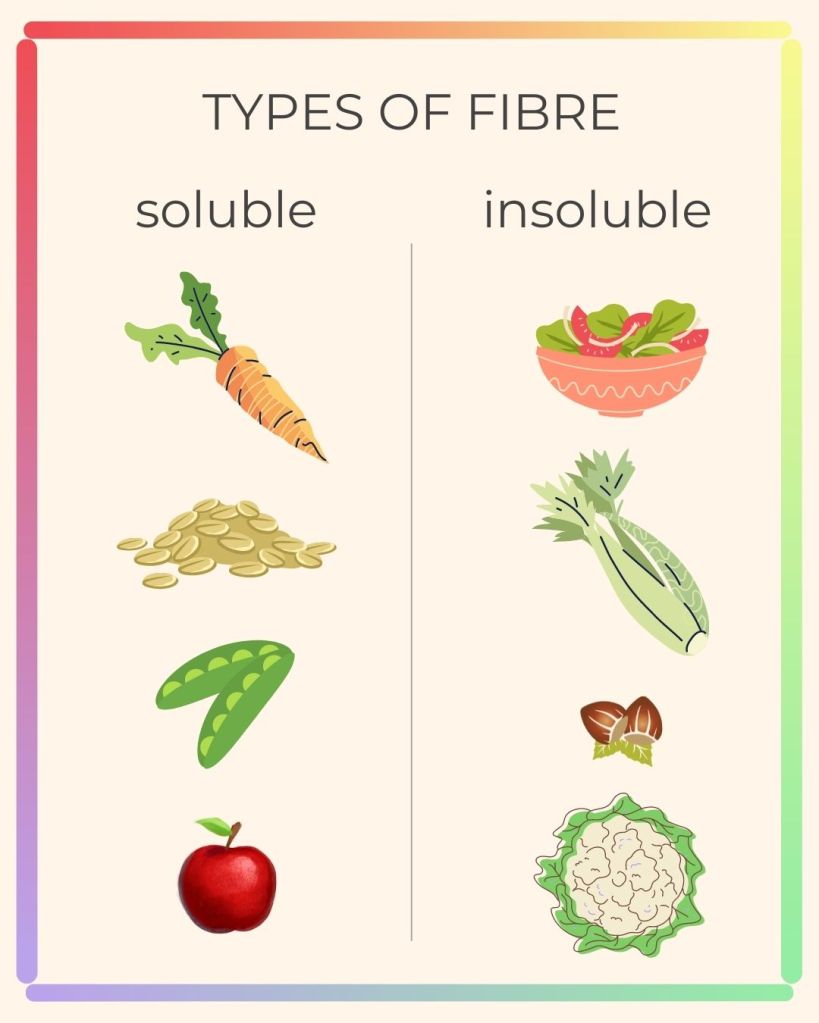
- Soluble fibre –things like pectin and gums found in carrots, apples, oat and peas– dissolves in water. Together with water it creates a gel that may help improve digestion, from top to bottom. Eating soluble fibre also leads to a more balanced blood-glucose, which may reduce risk of developing diabetes.
- Cellulose and hemicellulose, known as insoluble fibre, does not dissolve in water. When in the intestine, insoluble fibre actually attracts water making your stools softer and easier to pass. A diet high in insoluble fibre helps support insulin sensitivity. Lettuce & leafy greens, celery, cauliflower and nuts are rich in this type of fibre.
🇮🇹 La fibra è un componente essenziale per la salute dell’intestino e dell’organismo in generale, anche se non possiamo convertirla in energia. E nel mondo occidentale si tende a non mangiarne a sufficienza.
Esistono due tipi di fibra: solubile e insolubile. La maggior parte della verdura contiene entrambe le forme, ma in diverse quantità.
La fibra solubile (pectina e gomme) forma, insieme all’acqua una sorta di gel che aiuta la digestione in diversi aspetti. Questa fibra aiuterebbe anche con l’equilibrio del glucosio, riducendo il rischio di sviluppare il diabete.
La fibra insolubile (cellulosa & Co.) attira acqua nell’intestino, rendendo la massa 💩 più morbida e facilitandone il passaggio. Questo tipo di fibra migliorerebbe anche la sensibilità insulinica.
 Cromo Nutrition
One thought on “Types of fibre”