Springtime is probably the worst period of the year for the ones who suffer from hay fever (allergic rhinitis) as flowers are blooming and their pollen floats in the air. That’s why I decided to write this blog post. However all allergic reactions implicate a histamine response which can be stabilised in a more gentle way —meaning, without using antihistamine drugs which give such annoying side effects. Therefore, whether your allergy (chronic non-life threatening) involves pollen or not, you may find this post helpful.
I personally used to be photosensitive (sensitive to sun light) with very severe skin reactions after sun-exposure… and I know I would have loved reading this post back then!
When our immune system comes into contact with a potential allergen —and our antibodies are trying to get rid of it, the antigen— histamine gets released by our mast cells, a type of white blood cell.
Histamine release leads to a mechanism of self-protection against the allergen via:
- muscle tissues contraction — lungs, stomach…
- dilation of blood vessels
- increased heart rate
- product of stomach acid
(Histamine is also a neurotransmitter, but this is out of topic for now).
But histamine is also found in food!
The majority of the population can tolerate foods that are high in histamine… but, in this case —since we are unable to avoid some allergens completely— we can improve our post-allergic reactions by avoiding to ingest more histamine.
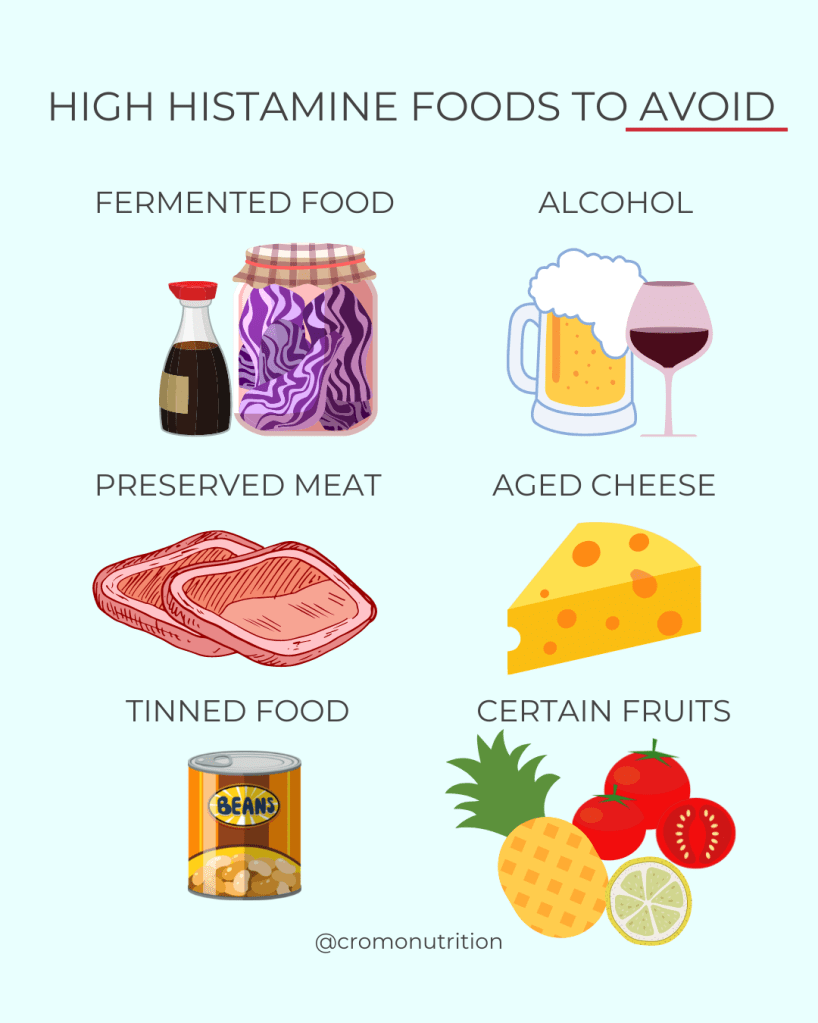
If you suffer from multiple allergies and/or you just had an allergic reaction you should try to reduce/eliminate the consumption of high histamine foods such as:
- Fermented foods — sauerkraut, kimchi, kombucha, soy sauce…
- Alcohol — especially the fermented one such as wine, cider, beer…
- Preserved packaged meat /fish — cured meat, smoked fish…
- Aged cheese — Cheddar, Gruyere, Parmesan cheese…
- Tinned food — beans, fish, fruit, sauces…
- Certain fruits such as citruses, tomato, pineapple…
When following a low-histamine diet, always prioritise fresh food:
- Fresh meat
- Fresh fish
- Fresh vegetables & fruits (apart from the ones mentioned above)
- Cheese such as cottage cheese or ricotta if you can tolerate dairy
An additional way to address the problem is by introducing those products that help lower histamine.
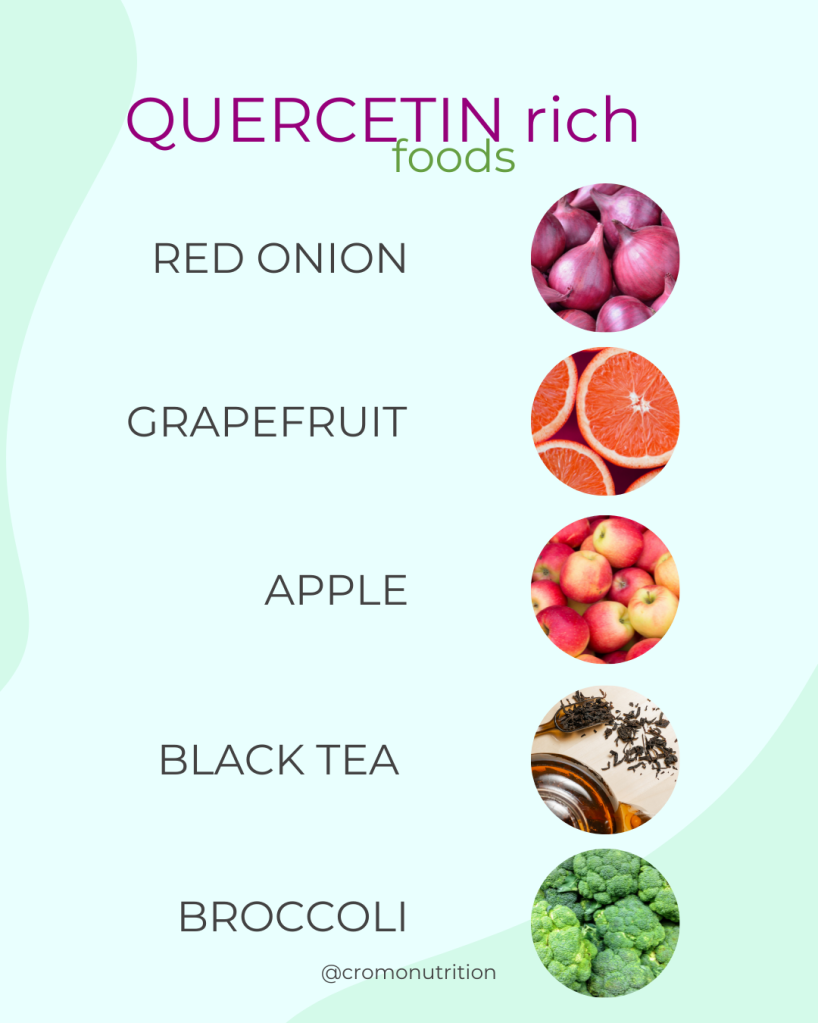
- Quercetin is a flavonoid —a plant compound— known for its strong antioxidant and anti-inflammatory benefits on human health.
In nature, querceti can be found in red onion, grapefruit, apple, black tea, broccoli… but it can also be taken as a food supplement. - Nettle is beautiful herb that helps blocking histamine production. You can have nettle leaves in the form of tincture, capsule or as a tea —especially if you are pregnant or breastfeeding and you can’t take many supplements.
- Moringa is another plant which has been studied in relation to allergies. Moringa leaf has been seen to reduce allergic reactions is both phases, acute or delayed.
- Reishi spores, high in triterpenes which have anti-inflammatory properties and can reduce histamine.
- Taking vitamin C is also a standard yet great way to reduce severity of allergic reactions.
- Essential for the functioning of our immune system, zinc can inhibit histamine production.
- It has been seen that some strains of bacteria can reduce histamine, so including probiotics in your daily supplement regime can be very helpful.
I hope you found this content helpful!
If you need more guidance and support with your allergic reactions, please send us a message via the ‘contact us’ box on our homepage and we will book you in for a free discovery call.
🇮🇹 Come riequilibrare i livelli di istamina durante la stagione delle allergie (o un’allergia cronica)
La primavera è forse il periodo peggiore per chi soffre di allergie al polline, ecco il perché di questo post. Anche se non soffrite di allergie croniche diverse da quella al polline (chiaramente non allergie letali), questo post potrebbe comunque esservi d’aiuto, dato che ogni reazione allergica implica il rilascio di istamina, la quale può essere regolarizzata anche attraverso l’utilizzo di un metodo naturopatico (senza quindi l’utilizzo di prodotti antistaminici).
Io, per esempio, ho vissuto per quasi vent’anni da foto-sensibile (avevo una sensibilità al sole), con gravi disturbi cutanei dopo l’esposizione al sole… e avrei tanto desiderato leggere un’articolo del genere in quegli anni!
L’istamina è quella sostanza che viene rilasciata dai globuli bianchi in presenza di allergeni per far sì che la reazione di “lotta” contro la sostanza nociva sia più efficiente e rapida —per esempio avvengono contrazioni di alcuni tessuti muscolari, dilatazione dei vasi sanguigni, aumento dei battiti, etc).
Quando il contatto con l’allergene è difficile da evitare o a seguito di una forte reazione, si possono adottare due soluzioni naturopatiche:
ridurre l’introduzione di istamina proveniente dal cibo e
integrare con prodotti che ne riducono la produzione.
Gli alimenti che contengono istamina e che andrebbero evitati / ridotti sono i seguenti:
- cibi fermentati (crauti, kimchi…)
- alcolici (soprattutto i non-distillati come vino, birra…)
- carni conservate (salumi, carne affumicata)
- formaggi stagionati
- alimenti in scatola
- certi frutti (agrumi, pomodori, ananas…)
In aggiunta, questi sono i prodotti naturali che possiamo assumere per riequilibrare la risposta allergica:
- La quercetina è un polifenolo (un flavonoide, per la precisione), cioè una molecola che si trova nelle piante che ha benefici sulla salute dell’uomo ed è conosciuto per i suoi benefici antiossidanti e anti-infiammatori. La quercetina può inoltre supportare il nostro sistema immunitario e contiene proprietà anti-allergiche e antivirali. antiossidante, stimola il sistema immunitario e inibisce il rilascio di istamina.
I cibi che contengono quercina in maggiori quantità sono: cipolla rossa, pompelmo, mela, broccolo e tè nero. - Ortica (foglia) — aiuta a bloccare la produzione di istamina
- Moringa (foglia) — riduce allergie in entrambe le fasi, immediata e di tipo ritardato
- Spore di Reishi — ricche di triterpeni i quali hanno proprietà anti-infiammatorie e possono ridurre l’istamina
- Integrare con vitamina C è un consiglio molto semplice, ma davvero efficace, dato che questa vitamina riduce la severità delle reazioni allergiche
- E anche lo zinco, minerale essenziale al funzionamento del sistema immunitario, può inibire il rilascio di istamina
- Probiotici — alcuni tipi di batteri aiutano a ridurre l’istamina
Spero abbiate trovato utile questo post.
Se avete bisogno di più assistenza nel gestire i vostri sintomi allergici, mandatemi un messaggio nella sezione “contact us” che trovate nella home e sarò felice di prenotarvi per una telefonata conoscitiva gratuita.
REFERENCES:
https://www.britannica.com/science/histamine
https://pubmed.ncbi.nlm.nih.gov/21625024/
https://pubmed.ncbi.nlm.nih.gov/18187018/
https://pubmed.ncbi.nlm.nih.gov/27187333/
https://pubmed.ncbi.nlm.nih.gov/18544899/
https://www.histaminedoctor.com/moringa-and-histamine-intolerance/
https://academic.oup.com/ajcn/article/85/5/1185/4633007
 Cromo Nutrition