In the Western World we eat way too much sugar, so, when I write the nutritional plans for my clients, I very often recommend to cut down on this highly addictive and inflammatory food.
Then, a question I get very often asked is “Can I use honey / agave syrup / maple syrup instead?”, that’s why I decided to write about it.
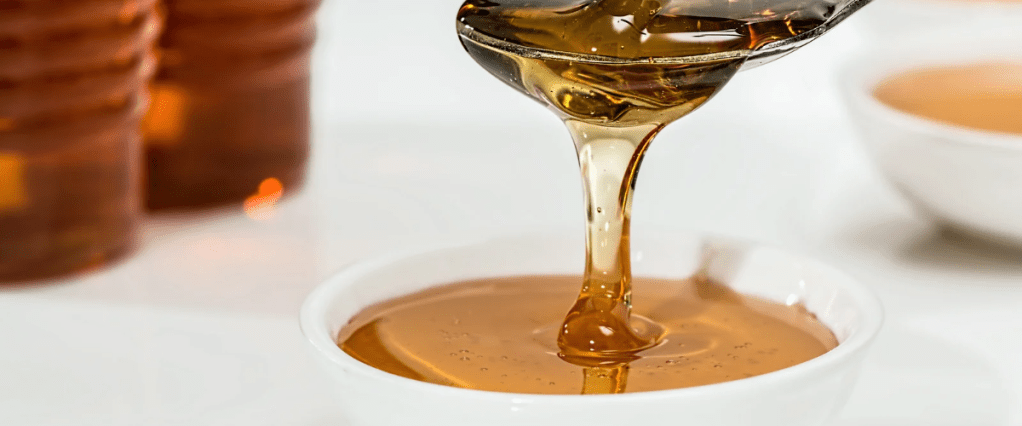
The difference between white sugar – either from sugarcane or from sugar beets – and some natural syrups is, unfortunately, very minimal because natural sugar alternatives are still predominantly sugar.
Each of these foods has a slightly different ratio of sugar molecules such as sucrose, fructose and glucose, or even fibre, protein or micronutrients.
So let’s have a look at these natural sweeteners:
Brown Sugar
This product comes from the same plants as white sugar — sugarcane or sugar beet. The main difference is that brown sugar contains a higher trace of molasses (a type of sugar-derived syrup).
For this reason, the sugar content of brown sugar is exactly the same as white sugar.
Honey
Honey is often seen as a great alternative than sugar, but is it true?
It’s definitely true that honey has a lower GI (glycemic index) than sugar, so it does not raise our blood-glucose levels so quickly. However honey is higher in calories per grams than white sugar, so let’s be aware of that.
The healthy side of honey is the number of enzymes and micronutrients found in it which can contribute to lower inflammation in the body.
Only traces of vitamins and minerals are found in honey, so please don’t swap your multivitamin complex for honey.
It should also be noted that we shouldn’t cook with raw honey or add it to boiling hot drinks.
Maple syrup
It comes from the sap from the wild sugar Canadian Maple Tree and it is made from 90-100 per cent of sucrose and 0-10 per cent of fructose or glucose. This means this is also sugar.
This natural syrup can also contains traces of organic acids, vitamins & minerals.
Agave syrup
Native to Mexico, agave syrup is extracted from a number of plants from the agave family.
It mainly contains fructose, a type of single sugar, therefore agave syrup can be sweeter in taste than regular sugar. This should invite people to use less of it, however the high fructose can trigger some digestive discomfort, so it’s not ideal for everyone.
Coconut sugar
This sugar comes from the coconut palm sap (not to be confused with palm sugar). Because it only requires a few steps to be produced, coconut sugar retains a number of nutrients from its plant.
Coconut sugar presents minerals such as iron, zinc, calcium and potassium, plus antioxidants and traces of protein and short-chain fatty acids. It also contains inulin, a type of fibre which can help slow glucose absorption — for this reason coconut sugar is considered low GI, but this does not mean it is not a sugar or a high calorie food.
Date syrup
Date syrup is made with dates and water. Coming from an actual fruit, makes date syrup slightly higher in fibre and potassium than other syrups and sugars. Plus, it is slightly lower in calories than white sugar, so it is very often seen as a healthy food.
I would like people to understand that, even if date syrup contains a tiny amount of fibre and less calorie per gram than other sugars, it is still a sugar, therefore needs to be added to food in moderation.
Do not binge on energy balls made with date syrup because you think “they are healthy!” – they are just healthier and less refined than cookies, but still sugary!
 Cromo Nutrition