Here you will find my top-four foods and habits that are good or bad to our gut.
By following these tips you can work on optimising your digestion!
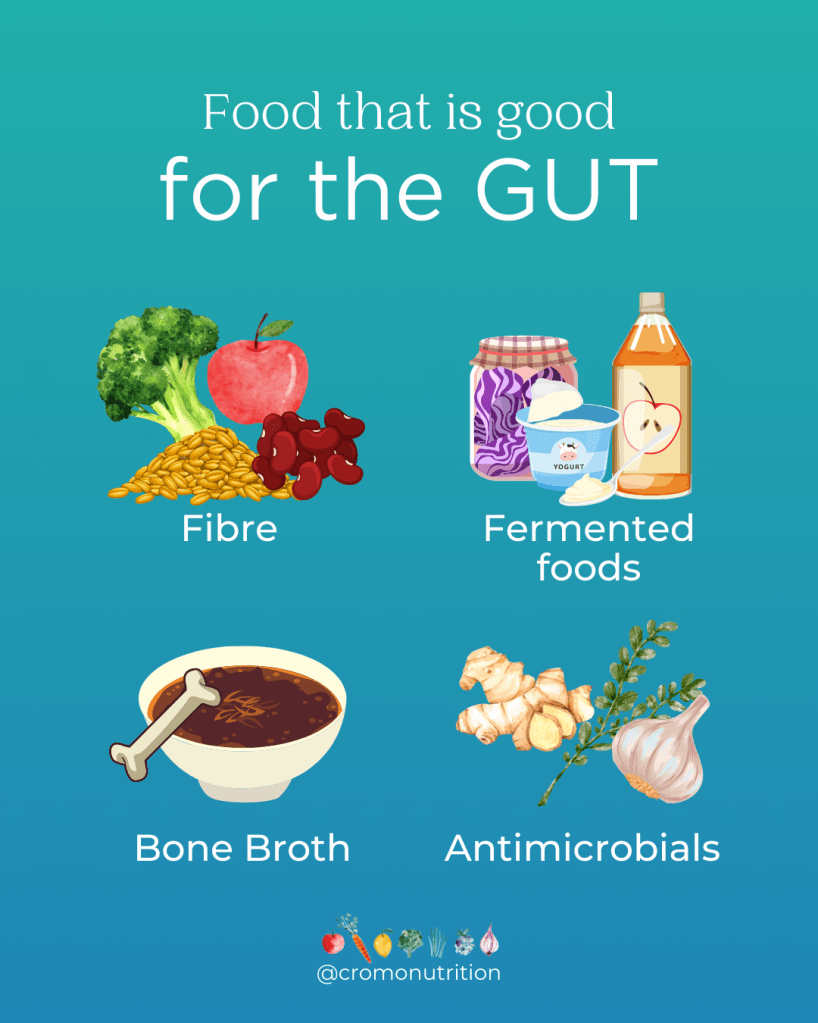
- FIBRE
Obviously, you can’t have a happy gut without the sufficient amount of fibre in your diet. Various studies have explained that the “Westernized diet, defined as high dietary intake of saturated fats and sucrose and low intake of fiber, represent a growing health risk” (review).
Increasing the amount of fibre you eat every day, especially the soluble kind, can improve your gut motility, therefore your regularity. By going to the loo, you eliminate what is no longer needed by the body –used up food, old cells, toxins… It is very important to have regular bowel movement –at least once or twice a day– to ensure general health.
Insoluble fibre is also crucial as it feeds our microbiota –those microorganisms who live into our intestine and help us with many biochemical functions, including regularity.
Make sure you eat a handful of salad or vegetables with some fruit at every meal. - FERMENTED FOODS
Products such as yogurt & kefir, apple cider vinegar, miso, sourdough, sauerkrauts & kimchi… are prepared via a fermentation process. This biochemical reaction creates bacteria that, as we mention earlier, can also be present in our digestive tract.
The bacteria in our gut help with digestion, immune function and vitamin synthesis, that’s why is so important to keep them healthy and introduce new ones every on a regular basis.
One or two tablespoons of yogurt in your porridge / sauerkrauts in your salad / a cup of miso soup… can really boost your gut health! - BONE BROTH
Preparing a soup made of bones –leftovers or fresh– alongside vegetables and herbs can help support our intestines.
Bone broth is, without any doubt, a superfood – it contains minerals, B12 and amino acids which help strengthen our gut lining, joints, hair, skin and nails.
If you suffer from irritable bowel sindrome (IBS) or inflammatory bowel disease (IBD), drinking a cup of bone broth a day can make the difference to your health as it soothes the gut lining and reduces inflammation.
Here you can find the recipe for a delicious bone broth! - ANTIMICROBIALS
Certain plants such as garlic, ginger, oregano… have antimicrobial (and anti-inflammatory) properties. This means that regular use of these ingredients in your dishes can help reduce the presence of bad viruses, bacteria or fungi in your gut.
I personally love soups, so I always make sure to add these herbs to my soups recipes… here you can find a revisited minestrone recipe and a creamy broccoli soup.
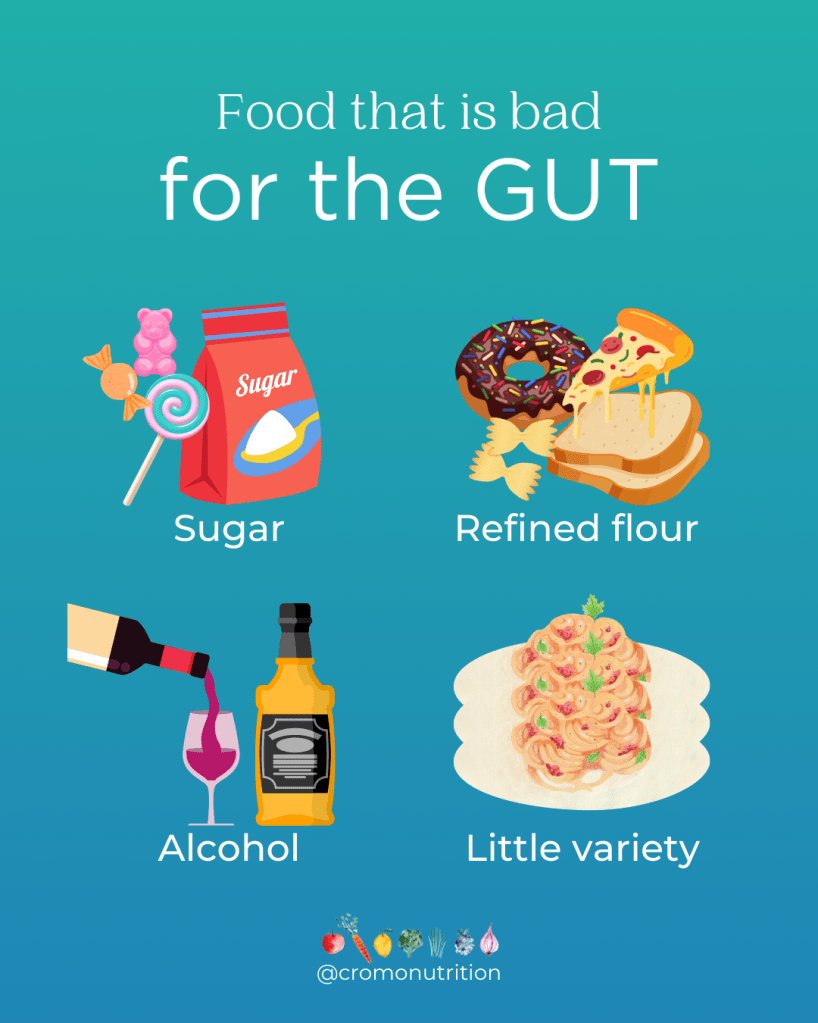
- SUGAR
This ingredient, incredibly popular in our Westernised diet, has been notoriously linked to conditions such as diabetes and obesity. However, a high intake of sugar and refined sugary foods such as cookies, sweets and chocolates… can have an impact on our intestines too. This 2021 study says eating a high amount of sugar is linked to tissue and organ dysfunctions. According to the researchers’ work “excessive sugar intake disrupt the intestinal barrier” which can lead to inflamed gut, food intolerances / food sensitivities, decreased microbiota function, etc…
Here you can find my useful tips to cut down sugar from your diet. - REFINED FLOUR
During the digestion process, big molecules of sugar known as starch are broken down into smaller molecules, in order to be used for energy production. Things like bread, pasta, white rice are made of starch.
So, we definitely need starch/sugar to produce energy, but the problem with most starches we find in supermarkets nowadays is that they are “refined”, meaning they are deprived from their natural fibre content. This makes them too easy to be digested and converted into energy, which can trigger too much sugar in the blood and inflammation.
My suggestion here is to swap all refined flours & Co. with whole grain products.
White rice >> brown or wild rice / actual grains such as spelt, quinoa, millet…
Pasta >> whole grain pasta / buckwheat pasta / lentil pasta
Noodles >> brown rice noodles / soba noodles
Bread >> whole grain bread / seeded bread
White flour >> whole grain flour / brown rice flour / add a non-refined or non-grain flour such as almond, quinoa, oats… - ALCOHOL
It is widely known that alcohol use can lead to different health issues. To the gut specifically, alcohol consumption may lead to inflammation and damage of the “GI and other organs” such as the liver.
I obviously recommend my patients to drink alcohol only in special occasions –parties, celebrations, etc… On top of that, I suggest them to drink a glass of water per glass of alcoholic beverage they will have, in order to help with hydration and alcohol detoxification. - LITTLE VARIETY
That non-human system called microbiota we mentioned before is huge in number – “The number of microorganisms inhabiting the GI tract has been estimated to exceed 1014” which is incredible, if you think about it. These tiny organisms belong to different families or even spices, sometimes, therefore they like different foods! For this reason I always encourage my patients to eat a wide variety of different plant-based foods such as different fruit, vegetables, grains, nuts & seeds…
Having the same dish or produce over & over again is also boring to our microbiota and it may lead to dysbiosis (imbalance of the microbiota).
I hope you found this post interesting and you will apply some of these tips.
However, you would like to work on your health / digestion with a personalised approach, request your free consultation via the form on this page – I will get in touch as soon as possible to book you in.
 Cromo Nutrition
One thought on “Boost your gut health in 4 (x2) moves”