As we always do, Jennifer and I are turning traditional Italian dishes into even healthier food! This month, we are dedicating or blog to vegan recipes, just in time for the Veganuary challenge.
Jennifer Cauli is a friend and a talented food & travel photographer who also comes from Italy. Together we joined forces to create a series of recipes (and pictures) that would use the typical Italian ingredients, but also have a contemporary and healthy twist.
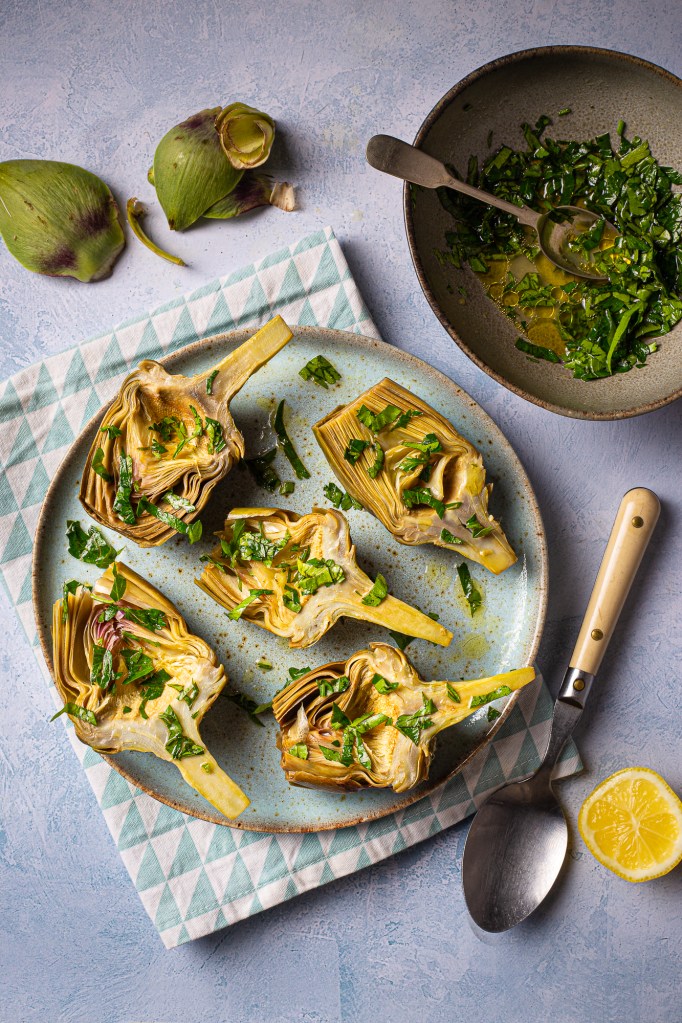
Cynara cardunculus var. scolymus is without any doubt one of our favourite flowers from the Mediterranean region, the area where Italy is located and where Jennifer and I come from.
Artichoke is an edible thistle (a flowering plant) and it is absolutely delicious —you can’t blame us for loving it so much!
When cooked artichoke has a succulent meaty pulp and a sweet and nutty taste. You can also eat it raw —mainly the inner part known as the heart— but the consistency is definitely more fibrous and the taste is bitter.
This chubby green thistle is also packed with nutrients and health-promoting benefits. Artichokes are low in fat and rich in fibre which make them a great food for our digestive system and our heart health. They also contain a good amount of antioxidants, vitamin C, K and folate, and important minerals, such as magnesium, phosphorus, potassium, and iron.
Medical research has found that this plant, which has been used for centuries for its benefits, may help balance cholesterol levels and blood pressure. Another great reason to consume artichoke as both a vegetable or an extract is the protective and stimulating effects it may have on our liver and gut health. The fact that this plant is also so high in fibre —especially a soluble fibre called inulin— makes it a prebiotic food, which can help improving the intestinal flora.
As we don’t waste anything in Jenny’s kitchen while preparing our recipes, we used those inedible artichoke leaves we removed before cooking to make a tea. This tea has a bittersweet taste and it is a great drink to stimulate digestion and liver health.
https://pubmed.ncbi.nlm.nih.gov/30308247/
https://pubmed.ncbi.nlm.nih.gov/22435514/
https://pubmed.ncbi.nlm.nih.gov/26310198/
https://pubmed.ncbi.nlm.nih.gov/29520889/
Serves 4
Preparation time: 20 minutes
Cooking time: 35 minutes
INGREDIENTS
8 artichokes
1 lemon
1 tsp salt
50ml white wine vinegar
1L water
2 tbsp extra virgin olive oil
a handful of fresh parsley
INSTRUCTIONS
Artichokes oxidise when cut, therefore rub some lemon juice into your hands before touching them.
To prepare the artichokes remove some of the harder outer leaves until you are left with the softer ones. Cut most of the stalk, leaving about 1 cm. Trim the stalk into a point and chop about 2-3 cm off the tips of the leaves.
Slice them in half and then cut the so called “beard“ just below the leaves.
Place the artichokes in a large bowl with water and the juice of two lemons (this will prevent them from turning black).
In a large pan bring the vinegar and water and 1 tsp of salt to the boil. Add the artichokes and let them simmer for about 30 minutes.
Leave to cool down into their own liquid.
Now we will prepare our dressing. Finely chop the parsley. In a small bowl pour in the olive oil and spoon in your parsley.
Pat-dry your artichokes with a tea towel and pour some of the parsley oil previously made on the top.
You can add a squeeze of lemon juice for extra sharpness if you prefer.


Looks delicious!
LikeLiked by 1 person